Showing posts with label Sports Nutrition. Show all posts

Thursday, May 19, 2016

Guest Post: Coffee’s Place in the Workout Regimen...Yes, Has a Place!

Be The First To Comment


Coffee drinkers in the US are averaging about 2 cups of coffee a day (~200 mg caffeine), with 10% of the population consuming more than 1000 mg of caffeine per day.

Coffee, and caffeine in general, has had a bad reputation in the past...but research shows that it can have many benefits during exercise, such as:  

  •  Ability to train at a higher power output (train harder)
  •  Increased speed
  •  Ability to train for a longer period of time (more endurance)
  • Ability to resist muscle fatigue
Common coffee-alternative forms of caffeine ingestion are pre-workout formulas or caffeine pills. Many of the ingredients in the pre-workout supplements are used to increase blood flow, heart rate, and focus, which is intended to help athletes feel energized before going into a workout. Unfortunately, the claims made on the supplement label are often times just a bunch of hype: 
  • There are no direct energy sources coming from the B-vitamins packed into a pre-workout formula and the excess that is being consumed is excreted from the body. 
  • All of the amino acids, vitamins, and minerals in these supplements can be obtained naturally through the diet and will prove to be an inexpensive way to get the same results. 
  • If you are trying to supercharge your workout, the safest and best option is always to choose natural sources first!
Another downside to excessive caffeine intake is that it can cause gastrointestinal issues, nausea, tremors, and over-stimulation that affects sleep cycles, and can cause anxiety. Therefore, some things to carefully consider for optimal performance results are: timing, form, and amount of caffeine consumed.

In addition, for student athletes, it's important to know that caffeine is actually a banned substance by the National Collegiate Athletic Association (NCAA) and consuming it in great amounts (if amounts in urine exceed 15 micrograms/mL) can result in a positive drug test. Many of those pre-workout supplements contain the same amount of caffeine in 4 cups of coffee, so it's important to be aware of how much athletes use. 

Some nutrition supplements do not disclose the amount of caffeine in their product or may contain other illegal/detrimental stimulants that you are not aware of, so make sure to do you research on what you put into your body.

This is the general rule for ALL dietary supplements - there is no government regulation on supplemental facts like there are on a food product's nutritional facts, so it is important to do research on any dietary supplements.

If you choose to drink coffee/caffeine to impact performance, be smart and use these helpful hints:

·         Consume about 1-3 mg of caffeine per pound of body weight
·         Consume caffeine 1 hour before cardiovascular endurance training
·         Caffeine can be consumed up to 20 minutes before high-intensity training
·         Find natural caffeine sources first!
                     Photo by SCAN/CPSDA Registered Dietitians

Thank you!

Ashley Beaner
Dietetics Student at SDSU

Tuesday, December 15, 2015

Fat Focus: Why You Should Eat More Healthy Fats

Be The First To Comment


This year's news sites may have left you feeling conflicted on how you should feel about dietary fats - after decades of low-fat recommendations, news articles started popping up, talking how butter isn't bad for you, why you should eat egg yolks, and why you should embrace fats.

It wasn't too long ago when all Americans were advised to adopt a low fat, low cholesterol diet. 

All of a sudden, there was a lot of conflicting information, and a lot of questions from clients about fat - how should we feel about them? Should we ditch the low-fat products and bring back the butter? Should we eat the beef and throw out the bacon? Well, yes and no. It is really the types of fats you're choosing most of the time that makes a difference.

There was a lot of research coming out in the 1970's ad 1980's that led to recommendations for Americans to decrease the amount of total fat (especially saturated fat) and cholesterol in their diets, which was often replaced with over-processed low-fat foods and carbohydrates, and without much guidance over what sorts of fats were still OK to be eating.

Use fats and oils sparingly
Usually when a food is processed and the fat is taken out of a product, companies have to add something else, and that something else is usually sugar, thickeners, additives and flavorings, which led to more processed low fat foods and refined carbohydrates. Replacing fats with carbohydrates (especially those refined carbohydrates) can lead to increased cholesterol and triglyceride levels. We replaced butter with margarine and vegetable oils, increasing our use of trans fats, like hydrogenated vegetable oils, which has now been shown to increase our bad cholesterol and decreases our good cholesterol. This is obviously the opposite of what the guidelines wanted!

Those low-fat foods also just don't leave consumers as satisfied as the original product, which can lead to over-eating in the long run.

 How many 100-calorie snack packs or fat-free flavored yogurts could a person eat without getting full? Probably quite a few! 


These foods are sometimes seen as better than a higher-fat food because they're lower in calories, but those foods often contain a lot of sugar and just don't leave you satisfied. Low in fat and low in calories doesn't mean something is healthier.

The research can get confusing, and there are so many schools of thought on what type of diet we should be eating with varying levels of fat intake (vegan, paleo, raw food, the list goes on...) Based on the research on the benefits of healthy fats, people should focus on adding more of the whole foods (including more healthy fats) to replace more of those pre-packaged/processed snack foods.

Including good fats in your diet.


Good fats are the fats found in seafood, seeds and nuts - monounsaturated (MUFA) and polyunsaturated fats (PUFA). These fats can lower your risk for heart disease (and related deaths), help lower cholesterol, and are  likely to keep you satisfied longer when paired with a complex carbohydrate (vegetable, fruit, or whole grain). 

Polyunsaturated fats:

Omega-3's are always a hot topic.Fish and fish oil are great whole-food sources of these fats.   Omega-3's are a type of PUFA that helps to reduce inflammation in the body, lower triglyceride levels and improve heart functioning. 
    Include more healthy fats in your diet by eating fatty fish (salmon, albacore tuna, sardines, trout or mackerel) at meals 2 times per week, adding ground flaxseed or chia seeds to snacks (sprinkled on oatmeal/cereal, on yogurt, in baked goods), and add walnuts to a homemade trail mix.

    ***If you are looking for a fish oil supplement, not all supplements are made the same. Look for at least 500 mg of DHA+EPA per serving of the capsules. 

    Monounsaturated fats:

    You may have heard that eating nuts and olive oil can be good for your health - these are two great sources of monounsaturated fats. Although nuts are high in fat (and even contain saturated fats), this is where we again draw the line that not all fats are created equally. These sources of healthy fats are minimally processed and can not only make your heart healthy, but will again be more satisfying if added to meals:
    • Nuts and nut butters- a great source of heart-healthy fats, protein, and fiber. Look for nut butters with the oil on the top - it is easy to stir it in, and some of the other varieties contain trans fats/hydrogenated oils and sugar. For a snack, grab a small handful or ~1 oz of nuts and pair it with a piece of fruit or dried fruits. 
    • Avocado - packed with vitamins E, C, potassium and loaded with fiber. Try swapping your usual sandwich spread for avocado or try topping your toast with some avocado instead of butter.
    • Olive oil - great on salad! A salad dressing with fat helps you absorb the fat-soluble vitamins in the vegetables
    Coconut oil is actually high in SATURATED fats, not the heart-healthy MUFAs and PUFAs that have been shown to benefit our health. Although this fat is highly-regarded in articles on many popular health sites, there hasn't been much research done on this fat.
      Instead of focusing on cutting out processed foods entirely, make an effort to increase these healthy fats (nuts, seeds, fish, avocado, and olive oil) in your meals and replacing snack foods with sources of these fats. 

      How do you incorporate healthy fats into your diet?

      This easy post-workout smoothie recipe is a great way to eat those healthy fats, has plenty of healthy carbohydrates to refill your glycogen stores, protein to promote muscle repair, and berries and healthy fats to reduce inflammation after a hard workout.
      • 1 cup frozen berries
      • 1/2 frozen banana (makes smoothie extra thick, like a milkshake)
      • Several handfuls of spinach
      • 1-2 Tbsp ground flaxseed (you can buy it ground and keep it in the refrigerator or grind it yourself with a coffee grinder) or 1-2 Tbsp chia seeds or 1 Tbsp nut butter of choice (peanut, almond, cashew butter)
      • 1/2 cup - 1 cup plain Greek yogurt
      • 1 cup milk of choice
      Add all ingredients to blender and blend until smooth. You can customize the smoothie with different fruits and seeds/nut butters. 
      Perfect post-workout breakfast. Top with additional healthy toppings - oatmeal, granola, dried fruit, frozen berries, peanut butter, hemp seeds, chia seeds, sunflower seeds, walnuts, etc!
      Call or e-mail the Sports Nutritionist to make an appointment and get recipes to incorporate more healthy fats into your diet.

      You might also like:

      EatRight PRO || Quick Tips for Making Environmentally-Responsible Seafood Choices

      Kath Eats Real Food || Why This Registered Dietitian Eats More Fat

      Fact Sheet || Coconut Oil and Health

      Washing State Dept. of Health || Farm Salmon vs. Wild Salmon

      Harvard Family Health Guide || The Truth About Fats: The Good, the Bad and the Ugly

      Wednesday, November 11, 2015

      The Athlete's Guide to Reading a Nutrition Facts Label

      Be The First To Comment

      Do you read the nutrition facts label on the back of food items?

      Knowing how to read a nutrition facts label is important for everyone, especially athletes who want to gain a competitive edge by fueling their bodies with the best foods possible. 

      Many packaged foods will have some sort of advertising on the front that often makes the food sound healthy or to appeal to the increasing number of health-conscious shoppers...but did you know those front of the package statements can often be very misleading

      For instance, you may have read a story in the news this week about a lawsuit against General Mills for falsely advertising or being misleading in their labeling of "Cheerios Protein". 

      The nutrition facts label of the higher protein cereal lists a larger serving size, and contains a significant amount of added sugar compared to the regular cereal. Consumers may think they're buying a healthy product by buying the cereal advertised as having more protein, because protein is touted to help keep us fuller for longer and build muscle...but honestly, the protein-enhanced product isn't worth the extra added sugar. You're better off having your cereal with a protein-rich cup of milk or having a side of eggs or yogurt. 

      This blog is to help guide you in making healthier choices at the grocery store by reading the nutrition facts label and knowing what to look for. 

      The nutrition facts label will let you know: The Serving Size, Calories, Total Fat, Saturated fat, Trans fat, Cholesterol, Sodium, Total carbohydrate, Dietary fiber, Sugars, Protein, Vitamins and minerals for the serving size indicated.

      So in the example label below, 1 cup (228 g) of this food contains 250 calories, 12 grams of total fat, 30 mg of cholesterol, etc.
      The Academy of Nutrition and Dietetics Sample Nutrition Facts Label

      1. Start with the serving size

      The "Serving Size" tells you the amount of food you get per serving, and all the nutrition facts listed are for that amount of food.

      So, as mentioned above, there are 250 calories in 1 cup of this food. The next thing you should notice is that right below the "serving size," it lists that there are 2 servings per container. If you eat the whole container, you have to multiply all the nutrition facts by 2 (or whatever the amount of servings per container are). If you eat 1.5 cups, you would multiply the nutrition facts by 1.5, and so on. This is a good time to notice what your usual portion is versus what the serving size is for that food. 

      2. What all the percentages mean...

      The % Daily Values (DV) listed are based on a 2,000 calorie diet. This means if the label says the food has 10% DV for fat, the serving of that food is 10% of the fat in the diet of a person eating 2,000 calories a day.

      These percentages aren't always relevant to athletes who often have higher energy and nutrient needs or have different macronutrient intakes based on their individual goals. Focus less on these percentages and really understand what the actual amounts are, which nutrients you should limit and which you should

      3. Look at the calories, fat, and sodium

      If you multiply the portion you usually eat by the serving size indicated - how many calories, grams of fat and milligrams of sodium are in your typical serving?

      Calories aren't always the most important indicator of whether a snack is healthy or not, BUT  this number can be important for determining serving size, depending on your goals. If you're trying to lose weight, you might compare two similar products and see which one has less calories for the same serving. If you are choosing a snack, calories are important because you don't want to eat a product that has a full-sized meal amount of calories at snack time. If you're trying to put on weight, you might want to choose the product that has more calories per serving. 

      Reduce the amounts of these foods: 

      Trans fats -  Not all fats are created equally, so it is important to choose products that have no trans fats, which are often found in processed, packaged baked goods and snack foods. These fats can promote inflammation, which is bad news for athletes who should be focusing on reducing inflammation for faster recovery. 

      Sodium - The recommended daily amount of sodium (salt) is under 2000 mg per day, but many athletes spend a good amount of their day sweating out salt. Focus on choosing unprocessed foods that are low in sodium most of the time, but if you notice a food you regularly eat is higher in sodium, make sure to pay attention to the serving size. Canned vegetables and soups, bread and snack foods are some of the higher sodium foods, so make sure to read the label.

      4. Increase fiber, vitamins and minerals

      Dietary fiber is found in complex carbohydrates, like whole grains, vegetables and fruits. These foods help keep athletes control body weight, regulate blood sugar, and maintain body weight. Include more of these foods in your diet. Athletes should focus on getting at least 25 grams of fiber per day


      Foods that include more vitamins and minerals will help promote good health and lower inflammation that helps athletes recover more quickly and stay healthy throughout the year.

      5. Check out that ingredient list

      I'm sure you've heard people say you "shouldn't eat anything you can't pronounce," but it might be worth it to focus your attention on choosing foods that, in general, have fewer ingredients. If you're choosing a pre-packaged product, it may have a preservative or ingredient that makes it more shelf-stable that you may not be able to pronounce/recognize...but that doesn't necessarily mean the food is unhealthy. The ingredients are listed in descending order by weight, which means the food contains the largest amount of the food listed first and the least amount of the ingredient listed last on the label. 

      My tips for using the ingredient list to your advantage: 

      Choosing a whole grain product/bread

      The first ingredient of the bread/cereal/whole grain product you choose should be whole wheat flour or whole grain flour. The package may even be labeled "100% whole grain bread" - this is the bread that contains more fiber, vitamins and minerals than the white/processed breads.

      Avoiding partially hydrogenated oils

      If you spy the words "partially hydrogenated" on your food label, that indicates that the food item contains trans fats, which are those unhealthy inflammation-promoting fats that can raise your cholesterol. Avoid this ingredient, which is often found in baked goods, chips/snack foods, coffee creamer, margarine, fried foods (donuts, french fries), and canned cinnamon rolls/biscuits. Even if a product claims it has "No trans fat!" it can still have a small amount - check the label to make sure you're choosing foods without this ingredient. Athletes need to be focusing on reducing inflammation, and this ingredient isn't going to help you meet your goals. 

      Limit added sugars

      This article isn't here to tell you that all sugar is bad, but if you're buying a food that  you eat daily (yogurt, cereal, granola, snack bars, bread, crackers), you need to be aware that sugars are often added to enhance taste or color of the product (even if you wouldn't expect the food to contain sugar and even if the food doesn't taste sweet).

      The sugars listed on the nutrition facts label can indicate naturally-occurring sugars (lactose in milk or yogurt, sugar found in fruit juices), in addition to added sugars (sucrose, high fructose corn syrup, honey, brown sugar, etc). You might even find sugar in things you wouldn't think have sugar, like peanut butter!

      Look for added sugars by noticing where "sugar" is listed in the ingredients list - is it the first or second ingredient? Try to find a comparable product where sugar is listed later. With yogurts, you can usually choose the "plain" variety and add your own sweetener - the ingredients should just be "milk and added cultures.

      Adding berries, cinnamon and a touch of honey is a good way to sweeten plain yogurt.

      It may take a bit longer at first to start reading labels, but after a while, you will know which brands and products to put in your cart. 

      Related links:


      More questions? Need help choosing better options at the grocery store?

      Make an appointment with the Sanford sports nutritionist to discuss how to individualize your diet to meet your goals. Call 605-312-7878.


      Wednesday, October 21, 2015

      The Quick Guide to Fueling Young Athletes

      Be The First To Comment

      Consistent good nutrition can support a child or teen's growth, development and immune system, and can also help them be a stronger athlete and a more attentive student. If this is the case, why is the sports environment filled with fast food? Why are athletes choosing supplements to help them perform better when they're choosing junk food for meals and snacks?

      We've all been to a youth sports game or tournament where they're serving hot dogs, candy and soda and the half-time snack for the young athletes is a bottle of sports drink and some sort of fast food or prepackaged snack. A busy sports schedule can result in reliance on fast food or pre-packaged snacks and meals, which can be convenient, but don't support your athlete in feeling good and performing well.


      If I were to make it really simple, I would tell kids to do these things to have the best "athlete's diet":

      1. Don't skip meals. This means eating breakfast, lunch, dinner and snacks, every day.
      2. Drink water throughout the day - carry around a water bottle and fill it up throughout the day. Drink more the day before a competition/game/race.
      3. Eat snacks! Eating a snack with protein after exercise can help promote muscle repair and growth.

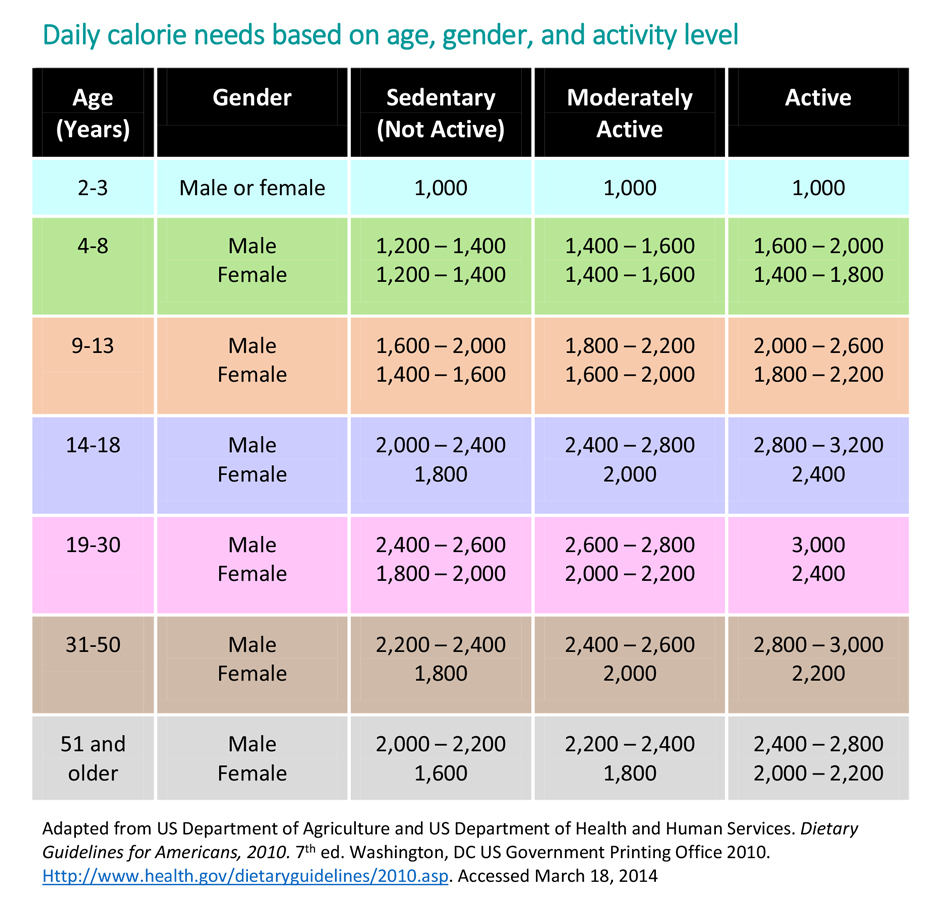
      How many calories does a young athlete need?

      This chart can help you determine how many calories your young athlete needs based on their age and physical activity levels. You can see the difference between a sedentary and active been might just be 400-600 calories, the equivalent to a few extra snacks throughout the day (not a free pass to eat whatever they want). 
      Moderately active = walking to school
      Playing a soccer game = 
      vigorously active
      You may feel as if your child is ALWAYS hungry - they may need to add more snacks throughout the day, or even an extra meal during the day. Again, this all depends on how active they are and if they're having a growth spurt.

      What foods should young athletes focus on?

      A common mistake among young athletes make is thinking they can eat TONS of protein to build muscle, but they're often not meeting their calorie needs. Young athletes need to focus on eating enough calories in addition to exercising (especially strength training) to build muscle.

      An easy way to talk about good nutrition to a young athlete is to talk about food being fuel for their activities. Kids usually know that junk food doesn't make them feel good, so help them make the connection that when they eat healthy foods, they feel good!

      Of course, if they have the choice to eat junk food at home, they may choose cookies, candy and chips over fresh fruit and vegetables because it's convenient (and tastes good). Make the healthy options convenient by cutting up extra fresh fruit and vegetables and making the junk food unavailable in the home.

      Carbohydrates are our muscles' main fuel source, so they should make up the majority of the diet (55-75% of total calories coming from carbohydrates). Carbohydrate foods include: whole grain bread, pasta, and cereal, grains such as oatmeal and rice, vegetables and fruit. Aim to make half of all grains whole grains for added fiber and nutrients (brown rice vs. white rice, whole grain bread and rolls vs. white bread).

      Protein helps with muscle repair and growth, but it doesn't need to be the biggest focus. Although athletes need more protein on their plates, they can meet their needs by including protein at each meal and snack. Good sources of protein include meat, poultry, Greek yogurt, beans, nuts, seeds, milk and eggs.

      Protein
      8 years old: 4 oz
      9-13 years old: 5 oz
      14-18 years old: 5 oz (Female)
                                 6.5 oz (Male)
      One-ounce equivalent: 1 oz. meat, poultry, fish, ¼ cup beans, 1 Tbsp nut butter, 1 egg, ½ oz nuts/seeds

      Healthy fats should be part of your athletes diet - we're talking about nuts, seeds, olive oil and avocados. Avoid trans fats in fried foods (menu items that say "crispy" or "crunchy") and pre-packaged baked goods and snack foods.

      Use avocado instead of mayo on sandwiches/wraps. 

      Is breakfast really that important?

      Children and adolescents need to be eating breakfast every day, especially if they're involved in sports. Skipping breakfast has been attributed to more weight gain, and eating breakfast can help kids have more energy and pay attention more during the school day. We're not talking about a bowl of sugary cereal here - even if breakfast is small and on-the-go, try to choose foods from more than one food group. Good examples include:

      • Granola bar and a banana
      • Hard boiled egg and an apple
      • Greek yogurt with granola and blueberries
      • Dry cereal and nuts
      • Apple with peanut butter and raisins
      • Egg sandwich with 2 eggs and cheese
      • Fruit smoothie

      Should young athletes drink sports drinks?

      The American Academy of Pediatrics reports sports drinks contain extra calories and sugar that children don't necessarily need and that for children participating in normal exercise activities, plain water should be the drink of choice. Children and adolescents should really never be drinking energy drinks, and should only drink sports drinks during prolonged, vigorous physical activity (similar to adult recommendations). 

      Children are more susceptible to becoming dehydrated because they sweat less than teens and adults, so young athletes should aim to consume 4-8 oz. (several large gulps) of water every 15-20 minutes of physical activity. They may need even more if they're sweating a lot or wearing protective equipment.

      What about sports supplements?

      The supplement industry loves to make things exciting and make promises about enhancing performance, helping you lean out, make strength gains or give you energy with little scientific evidence to back up these claims.

      Young athletes, especially high school students, can get caught up in these exciting messages pushing protein supplements to enhance muscle growth and athletic performance. In reality, there is no magic pill - all children and adolescents can meet their protein needs through real food sources and there are many real food sources of the same supplements they're spending so much money on.

      You can't take supplements to replace hard work or good nutrition. 

      You (or your young athlete) might enjoy:


      Kids Eat Right || 6 Healthy Ways to Manage Weight for Sports || 8 Gameday Nutrition Tips

      Jill Castle, MS, RDN, CDN || Eat Like a Champion
      ***This book was a great resource in writing this article!

      Mark Bittman @ The New York Times || Getting Your Kids to Eat (Or At Least Try) Everything 

      Sally Kuzemchak @ Teen Being || Are You Being Snacked to Death?


      Tuesday, October 13, 2015

      The Secrets to a Healthy Gut

      Be The First To Comment

      Bacteria have a bad reputation, especially during the fall and winter seasons, when everyone around you seems to be coming down with the flu or a cold. Many athletes during this season might be increasing their training volume and are looking for a little extra immune support. 


       While it's true you'll want to wash your hands more often to prevent the spread of bacteria that cause illness, this can also be a good time to focus your attention on increasing your relationship with good bacteria. It has been estimated that your body has fewer human cells than bacteria. With about 10^14, (that's 100,000,000,000,000 bacterial cells!), your body acts as a host to many bacteria, including GOOD bacteria found in your gut, which can actually help you boost immunity and overall health.

      The profile of your gut bacteria (gut microbiota) can promote health by: 
      • boosting the immune system
      • secreting antimicrobial substances that prevent bad bacteria from colonizing and making us sick
      • helping with digestion
      • producing vitamins (B-vitamins and Vitamin K)
      Maybe you've heard that taking a probiotic supplement or eating certain yogurt brands can be healthy, but you might not know why. Probiotics are live micro-organisms, which, when administered in adequate amounts, confer a health benefit to the host. These are the good bacteria that deserve your attention - you want a healthy population of good gut bacteria in your body. The profile of these bacteria is affected by age and antibiotic use, but is also affected by things you can control, like stress levels and the things you eat. For instance, eating more probiotics may increase the population of good bacteria. 

      Most of the good bacteria or probiotics you'll hear about come from the Lactobacillus species and/or the Bifidobacteria species, but there's also different strains/types of the bacteria, and varying doses/amounts found in foods or a supplement. Many of the doses found in foods are pretty low compared to supplement forms, which can contain billions of Colony Forming Units (CFU's). 

      Although many research studies are inconclusive on the specific strain and dose of bacteria that is most beneficial, and whether or not food or supplement forms of probiotics are best for your gut health, there are many ways you can promote good gut health that are good for your overall health regardless of their probiotic content!

      1. Focus on prebiotics. Yes, you read that right - probiotics feed on prebiotics in your diet (indigestible ingredients like fructo-oligosaccharides (FOS) and inulin that the bacteria in your gut feed on). Prebiotics, are found in fruits, vegetables and whole grains like oatmeal or brown rice, so  eating a wide variety of these plant-based foods (especially onions, bananas, artichokes, asparagus, barley and garlic), will help keep your gut bacteria healthy.

      2. Eat fermented foods. Food such as yogurt, kefir, fermented vegetables like sauerkraut, kimchi, miso, and tempeh are good sources of probiotics. By eating these foods, which contain live/active cultures, you can promote a healthy population of your own gut bacteria.

      3. Reduce your stress level. Go for a walk, take a yoga class, wash the dishes, write in a journal - there are many ways to reduce stress levels. When we're stressed out, we may have GI issues such as an upset stomach or frequent bowel movements, or we may choose less healthy, comforting foods, both of which aren't healthy to our gut bacteria. 

      Focusing on these three strategies is not only good for overall health, it will help you promote a healthier population of gut bacteria, which can be immune-boosting and benefit your health. 


      What about supplements?


      You will find a lot of products or supplements in the supermarket that advertise their probiotic benefits, but taking a "foods first" approach to increase the probiotics in your diet is a great way to reap the benefits of those healthy foods (such as getting a healthy dose of protein from the yogurt or tempeh) without spending additional money on supplements. Again, most studies agree that eating probiotics is likely beneficial (even if research isn't conclusive on the most beneficial dose or strains of bacteria of whether foods or supplement forms are better). 

      Food sources of probiotics (like the fermented foods listed above) have been around for thousands of years and contain many other beneficial vitamins and minerals. That alone makes  these foods worthy of including in most diets, whether they're advertising their probiotic benefits or not


      A dietitian can help you navigate the options if you are thinking about including healthful probiotic-rich foods in your diet!

      What foods should I be looking for?

      The dietitians picks:

      Greek yogurt (Choose plain yogurt and add your own honey or chopped fruit)


      Kefir (Again, choose plain and blend it into smoothies. It is quite tart, so mixing it into smoothies is a great way to sweeten it up!)


      Tempeh (If you've never tried it - check out this article from the Kitchn).

      Kimchi and Sauerkraut  (Look for refrigerated varieties. Canned versions will have cooked and killed the live bacteria).

      Do you eat any fermented foods?

      More articles on this topic:
      ------------------------------------------------------------------------

      Nutrition Stripped || Guide to Probiotics

      EatRight.Org || Probiotics and Prebiotics: Creating a Healthier You

      NCAA/SCAN || Foods to Promote Immune Function


      Monday, October 5, 2015

      5 Tips to Making Hydration a Habit

      Be The First To Comment

      Have you ever heard the rule, "You should be drinking eight 8-oz glasses of water a day?" 


      I certainly have...and while this is a good rule of thumb, hydration guidelines are highly individual. This makes it difficult to give people, especially people of different body sizes and activity levels, a set amount of water to drink every day. 

      Probably not drinking enough water for her sweaty run in the desert!
      Most people know they need to drink more water - a CDC survey discovered that many people were falling short of their hydration needs, some people not drinking ANY water at all.

       You've probably heard that your body is made mostly of water, right? Water is essential for our cells to function! It helps our body get rid of waste, regulate temperature, helps our joints move smoothly and keeps your brain working correctly. 


      DID YOU KNOW...


      ...most people don't FEEL THIRSTY until they are slightly dehydrated. 

      ...being even slightly dehydrated can have an effect on your brain, heart, muscles and mood? Some people may experience headache symptoms, feel like they're in a bad mood, or feel like they can't focus.

      Athletes are especially susceptible to dehydration because they lose sweat during their workouts and often aren't drinking enough to replenish this fluid loss. When we lose sweat, our blood volume goes down, reducing the amount of blood pumped with each heart beat, which can impair performance by reducing the amount of oxygen delivered to our muscles. The bottom line is that even 2-3% decrease in body weight can impair performance. This brings us back to the question - 

      How do we know if we're getting enough water?


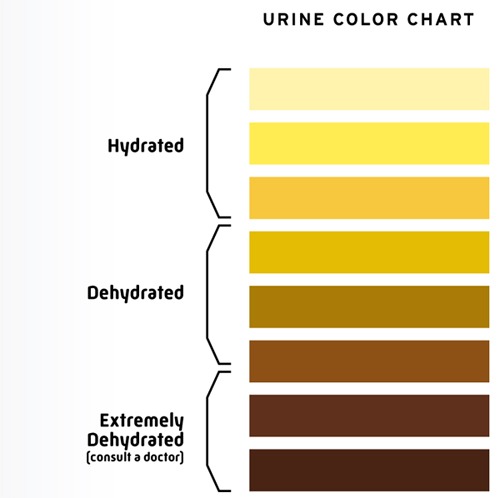
      Athletes often don't know that their performance is affected by hydration because they're always performing in a slightly dehydrated state. Because hydration is different for everyone, many health professions will refer to this "urine color chart" from the U.S. Anti-Doping Agency - if your urine is light yellow, you're probably drinking enough water. 
      U.S. Anti-Doping Agency


      What about coffee, tea and soda? Alcohol?


      Unless you're drinking 7+ cups of coffee, caffeinated tea or caffeinated soda per day, your daily cup of caffeine isn't going to cause you to be dehydrated. Alcohol, on the other hand, has strong diuretic properties, making you urinate more often, which can lead to rapid dehydration. This can be detrimental to active people and athletes, so making sure to limit alcohol to 1-2 drinks and at least 1 to 2 cups of water between each drink can help you stay hydrated.

      These 5 tips can help athletes and active people get and stay hydrated, feel better, and achieve optimal performance. 


      Grab your water bottle and fill it up


      The Sanford Power website has a Nutrition and Hydration for Team Sport Athletes page dedicated to this very topic! 

      Remember, everybody is different and you can be over hydrated. If you're running to the bathroom frequently or your urine is clear, you are likely drinking too much water, which can be just as harmful, if not more harmful to athletes than being dehydrated. 

      If you are an endurance athlete or exercising/practicing for several hours a day, you may want to consider adding an electrolyte replacement or sports drink to your routine to help you replenish the electrolytes you're losing in sweat. Some people might even try making their own sports drinks to help them stay hydrated.

      ----------------------------------------------------------------------------

      What are your best tips for staying hydrated? Ask the dietitian your hydration questions!


      Tuesday, September 29, 2015

      Pack a Snack

      Be The First To Comment
      Snacking is a huge topic in the news and among clients (Is eating more snacks better? Should I eat between meals? Is 5 small meals better than 3 large meals?) I recommend that clients eat when they're hungry, which often includes eating several snacks throughout the day, especially if you're very active or you're an athlete. 

      Packing snacks to bring to work or school is a great way to ensure you don't get stuck buying something over-priced from the school or work cafeteria or the vending machine (where the healthy pickings are slim). 

      Knowing which foods to pack as a healthy snack can save you money, provide you with more nutrients and fuel your body throughout the day. This is especially true for active people and athletes, who need more calories than the "average" person. Our bodies utilize nutrients better when we spread them throughout the day and timing meals and snacks to fuel activities and help our bodies recover can improve performance. 

      Comparing the Numbers

      The USDA reports:
      • fruit roll snacks are about 82 calories and 28 cents per portion
      • bananas are about 100 calories and on average, about 18 cents per portion
      Although fruit rolls/snacks and other foods of this variety can seem like a good deal because they often go on sale and may have health claims such as "100% fruit" or "An excellent source of vitamin C!", bananas and other fruits are often just as budget-friendly and contain more nutrients (that aren't necessarily advertised) to fuel your body than snack foods. 

      Pre-packaged foods aren't ALWAYS a bad choice, but if you can build a more complete, nutrient-dense snack with foods from several food groups, you'll stay fuller for longer and your body will be getting more vitamins, minerals and fiber. 

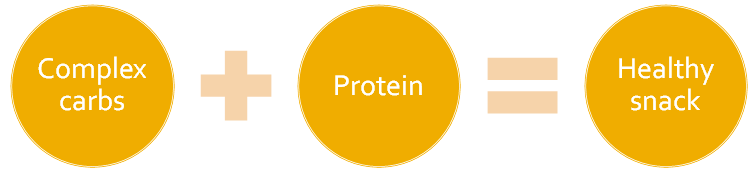
      The easiest way to choose a filling nutritious snack is to follow this formula:


      1. Complex carbohydrates
       
      Complex carbs are fruits, vegetables and whole grains. 

      Common examples include: apples, bananas, carrots, whole grain crackers, whole grain bread, potatoes, brown rice, raisins, granola, whole grain cold cereal or oatmeal and legumes/beans (chickpeas, black beans, peas, etc.)


      2. Protein

      Protein sources are dairy foods, meat and poultry, and nuts and seeds.

      Common examples include: yogurt (Greek yogurt has more protein!), milk, cheese, lunch meat, chicken, hard boiled eggs, almonds or other nuts.

      How much protein do you need? You're probably getting enough, but make sure you're getting some as part of your snacks!

      The Academy of Nutrition and Dietetics recommends making small swaps to your normal grocery cart by looking at the foods you "always" eat each week and trying to make a swap for a more nutritious option. For example, you can swap out those fruit snacks for a piece of fruit or swap that chocolate chip fiber bar for some nuts or whole grain cereal. 


      Again, your snack bar (or other favorite portable snack) may be satisfying and tasty, but you should set a goal to get more variety in your diet.

      Remember, eating snacks and meals with more variety, from more than one food group, is going to provide you with the most nutritional "bang for your buck" - you're going to be getting more nutrients and feel more satisfied with, for example, and apple paired with some nuts vs. if you just ate the apple by itself.

      The protein and healthy fats in the nuts help hold you over for longer and the carbohydrates in the apple give your body a quick source of energy. 

      10 portable snack ideas to throw in your backpack/bag/purse:

      1. Almonds/mixed nuts (~1/4 cup) with an apple
      2. String cheese and grapes
      3. Greek yogurt with berries and 1/4 cup granola
      4. Cheese and whole grain crackers
      5. A cup of milk and whole grain cereal
      6. Peanut butter* and celery with raisins
      7. Nut butter and jelly sandwich on whole grain bread or crackers
      8. 2 hard boiled eggs and an apple
      9. 1/3 cup oatmeal cooked with milk and 1/2 Tbsp peanut butter
      10. Beef jerky and carrots

      *You can portion peanut butter into small containers if you don't want to bring the whole peanut butter jar to work/school.

      Ask the Dietitian: What snacking questions do you have? What are your favorite snacks?

      I love plain Greek yogurt with berries and flax seeds. If I don't want to bring a lunch bag or don't have access to a refrigerator to keep it cool, I opt for a piece of fruit and nuts or a tablespoon or 2 of peanut butter. 

      Friday, February 27, 2015

      Did You Know?! We Do Many Things At SSSI

      Be The First To Comment
      The Sanford Sports Science Institute offers many services besides just research and nutrition consults. We have state of the art facilities that allow us to work as a multi-disciplinary team to help athletes of all levels and ages as well as active individuals reach their goals. Whether its achieving a new PR or getting back to exercise post injury, we can assist.
      Here are the services we provide, with a full description:


      COMPREHENSIVE GAIT ANALYSIS
      This is a comprehensive functional and biomechanical evaluation, as well as a rehabilitation and consultation service, for anyone who is looking to improve his/her running performance or with lower body musculoskeletal injuries. The analysis is performed on a Zebris® Force and Pressure Distribution platform that is integrated on a high-end h/p/cosmos® treadmill to analyze foot pressure, impact forces, roll-off and other gait parameters during walking and running. High-speed video cameras (100 fps) are used in conjunction with the Simi Aktisys automated motion-capture system to provide precise, quantitative biomechanical assessments for real-time biofeedback and off-line evaluation. Each athlete receives a personalized performance plan, including specific stretching and strengthening exercises, shoe/orthotic recommendations and corrective exercise techniques. Our expert professionals work one-on-one with the athlete to develop an individualized program to help achieve his/her specific performance goals.

      CYCLING SPIN-SCAN ANALYSIS
      Cyclists and triathletes can optimize their pedal stroke via a comprehensive computerized analysis on their bikes using the RacerMate® CompuTrainer™. The spin-scan evaluation calculates bi-lateral cycling efficiency of the leg musculature, as well as left vs. right power split and average torque angle. The individualized analysis also includes instantaneous, average and peak power output, revolutions per minute and speed.

      SPORT NUTRITION ASSESSMENT AND CONSULT
      Sport-specific nutrition interventions can help an athlete maximize power and endurance, as well as overall health and performance. The intervention begins with a 3-day dietary analysis, including an assessment of daily eating patterns, training dietary habits and nutrition tactics used during training and competition, including preparation and recovery. Through a one-on-one consultation with our sports dietitian, individualized strategies to maximize training and performance are developed. The dietitian also helps the athlete accommodate any specific allergies or chronic health conditions he/she may have. The goal is to help each athlete effectively fuel his/her body for optimal performance and health.

      RESTING ENERGY EXPENDITURE (REE) AND BODY COMPOSITION EVALUATIONS
      Determining an athlete’s REE, or roughly the minimum number of calories the body needs each day to function properly at rest, is extremely important when trying to personalize one’s nutrition and fitness strategies. Body composition (relative percentage of body fat and lean body mass) and REE are closely linked to one another and provide a foundation for establishing an athlete’s nutrition and fitness goals. Body fat percentage is estimated from multiple skin fold measurements and REE is determined from measuring oxygen and carbon dioxide exchange while at rest.

      SWEAT FLUID AND ELECTROLYTE LOSSES AND PHYSIOLOGICAL STRAIN IN THE HEAT
      This is an individual evaluation of an athlete in a specific environment using a temperature, humidity, and exercise intensity that elicited performance or health problems (for example, premature fatigue, heat exhaustion or muscle cramps) or to simulate upcoming training or competition conditions. Sweat fluid and electrolyte (sodium, potassium and chloride) losses are determined and cardiovascular and thermal strain (heart rate, core body temperature and physiological strain index) are evaluated. Individual-specific hydration and dietary strategies are provided, so that each athlete can more optimally prepare for, manage and recover from sweat fluid and electrolyte losses incurred during training or competition.

      HEAT TOLERANCE TESTING
      This is an evaluation of an athlete’s current tolerance to exercising in the heat. Athletes should consider having this test performed if he/she has had a heat-related illness, especially exertional heat stroke, or a long period of no exposure to the heat. This test can also be used to evaluate an athlete’s thermal and cardiovascular responses while wearing a particular clothing or uniform configuration during physical activity.

      ATHLETE FIELD EVALUATIONS
      One or more athletes are evaluated during training, practice or competition for hydration status (pre- and post-session), fluid intake and sweat fluid and electrolyte (sodium, potassium and chloride) losses.
      Individual-specific hydration and dietary strategies are provided to help each athlete more optimally prepare for, manage and recover from fluid and electrolyte losses incurred during training and competition. Thermal strain (core body temperature, heart rate and physiological strain index) can be monitored in selected individuals.

      FITNESS TESTING (VO2MAX)
      VO2max (maximal oxygen uptake) is the best measure of an athlete’s cardiorespiratory fitness. Also referred to as aerobic capacity, VO2max reflects the body’s ability to deliver and use oxygen to meet the energy demands of exercise. A high aerobic capacity is especially important in endurance-type activities (for example, distance running, cycling and swimming); however, it is also important to enhance recovery between brief intermittent bouts of high-intensity activity in other sports (such as soccer, tennis, basketball and football) during practice and competition. This is a progressive incremental exercise test using a treadmill or exercise bike, depending on the athlete’s primary sport or preference.

      FITNESS TESTING (LACTATE THRESHOLD)
      Lactate threshold (LT) reflects the exercise intensity at which the concentration of lactate in the blood increases sharply. LT is a very good predictor of sustained endurance capacity and performance and is also helpful in determining an athlete’s appropriate training intensity zones. A high LT is especially important in endurance-type activities (e.g. distance running, cycling and swimming). Tracking changes in LT can assist an athlete in assessing the effectiveness of his/her training over several months. This is a progressive, incremental workload exercise test using a treadmill or exercise bike, depending on the athlete’s primary sport or preference.

      PRESENTATIONS AND WORKSHOPS
      The Sanford Sports Science Institute can meet with coaches, support staff (e.g., athletic trainers and administrators) and teams to discuss sport-specific training and competition challenges and nutrition/hydration needs that can help athletes optimize training, performance and recovery. A particular emphasis is placed on the challenges and solutions to training and competing optimally in the heat, while reducing the risk for heat- and fluid/electrolyte-related problems (e.g., muscle cramps, pre-mature fatigue, exhaustion and hyponatremia).


      On our website you can find all this information as well as videos explaining some of the tests more thoroughly. Moreover, we have great education materials you are welcome to print and/or share with your coaches, teams, children and friends. For more information and/or to book our services, feel free to call us at (605)-328-4750. 


      © 2015 Nutrition Facts - Designed by Mukund | ToS | Privacy Policy | Sitemap

      Hide
      X